4 Simple Steps to Export MongoDB to JSON
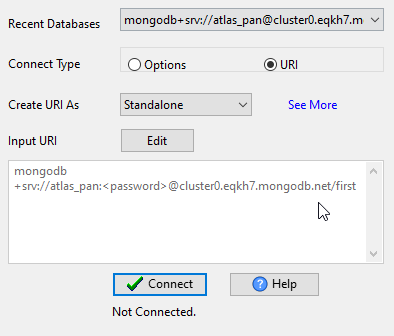
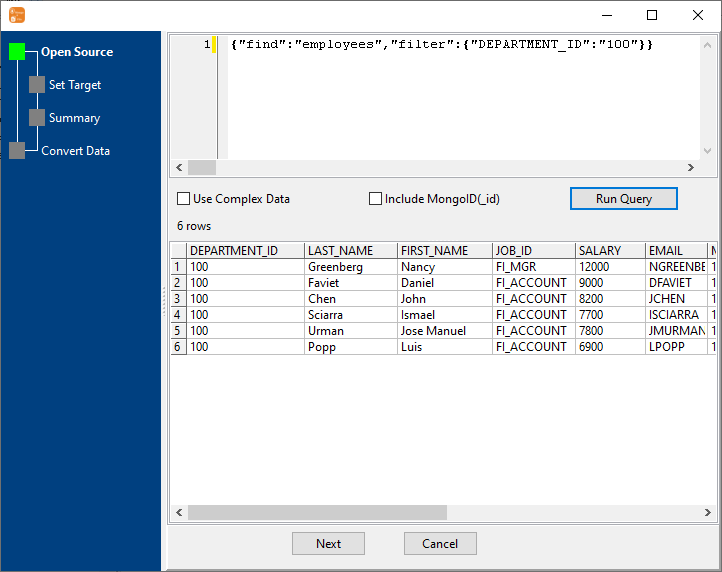
Connect MongoDB
Configure MongoDB connection (URI/host:port, authentication) — for MongoDB Atlas or self-hosted MongoDB.
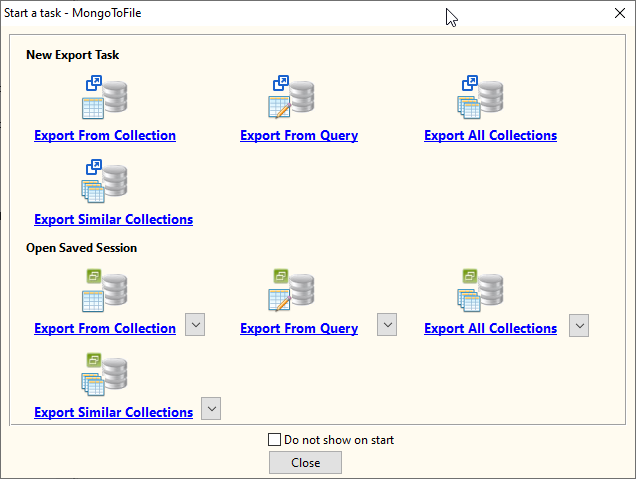
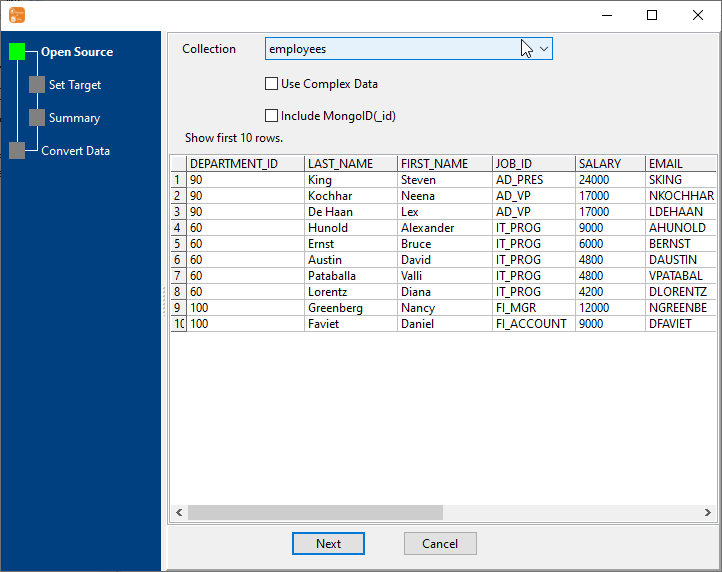
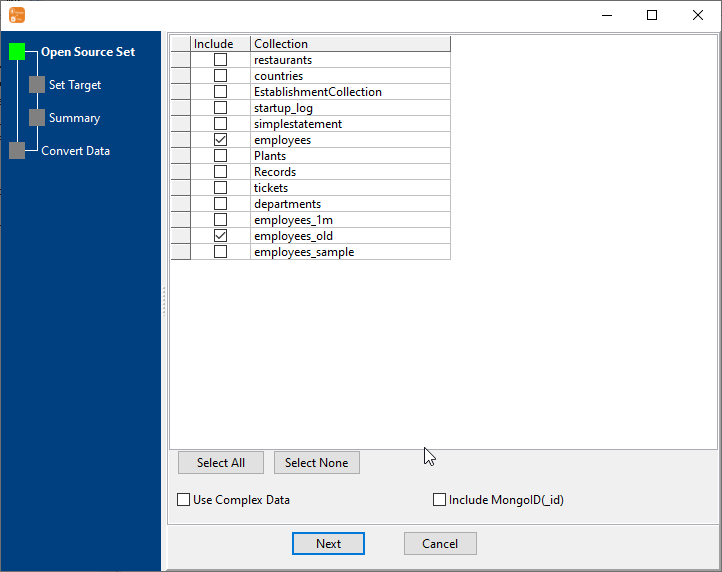
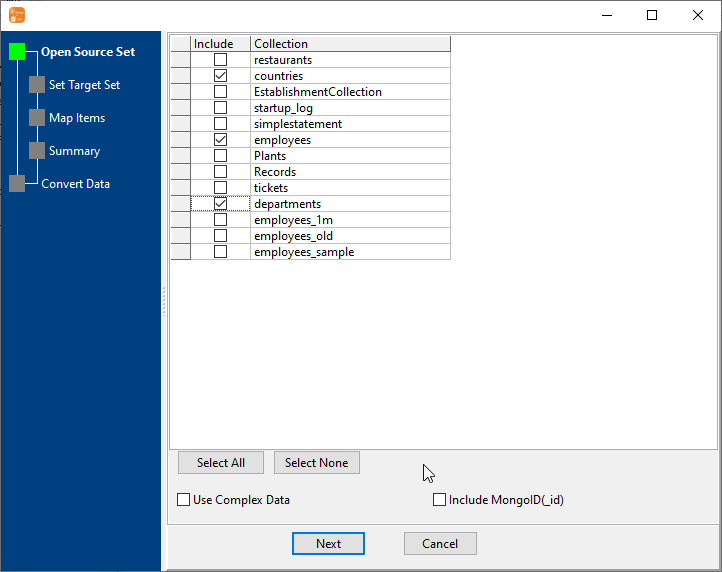
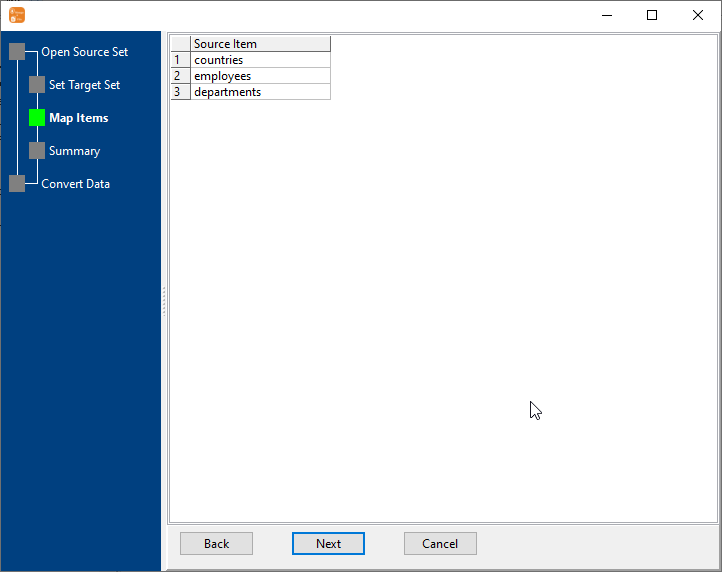
Select Export Type & Collections
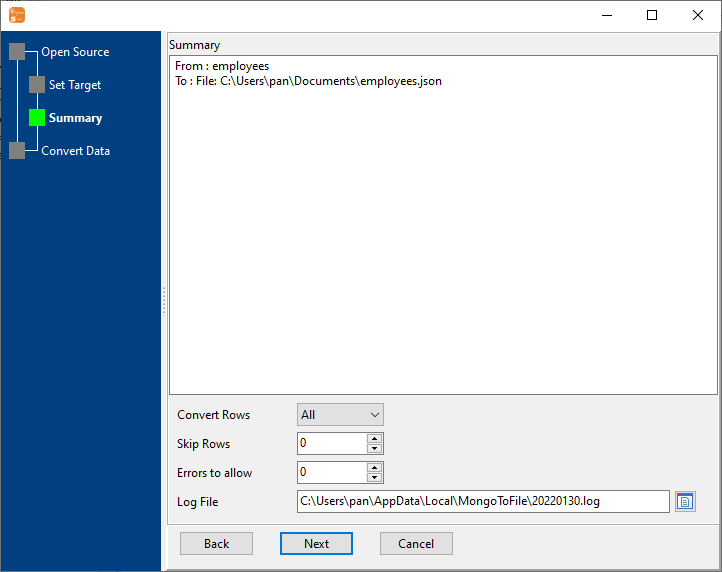
Choose one of the 4 export types (1 to 1, n to 1, n to n, Find Result to File) and select the relevant MongoDB collections or define your query.
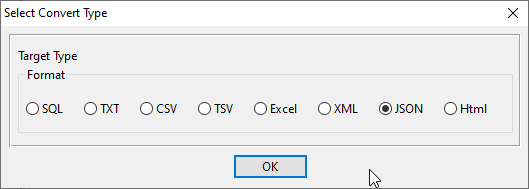
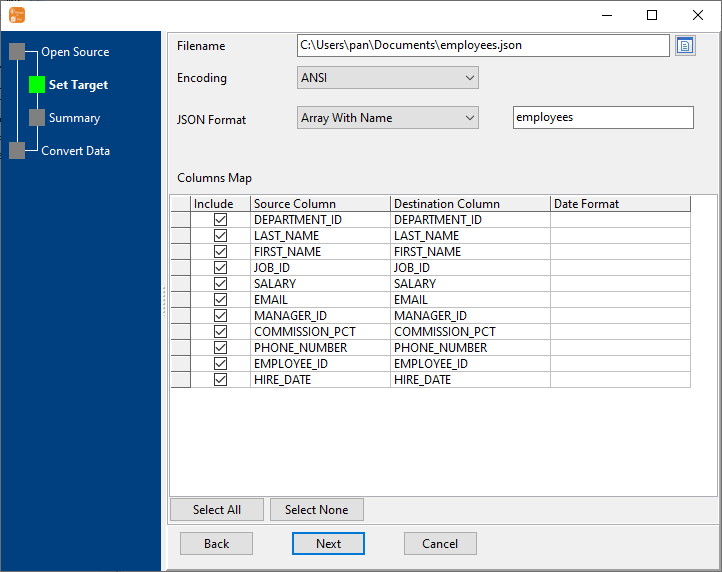
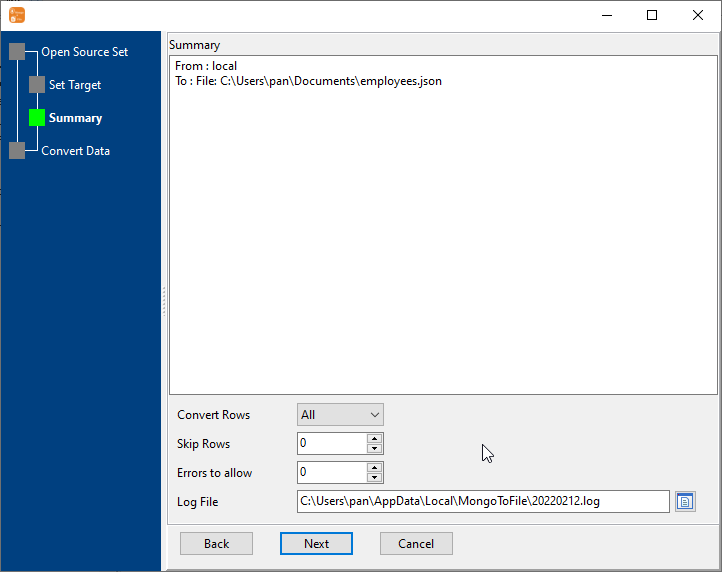
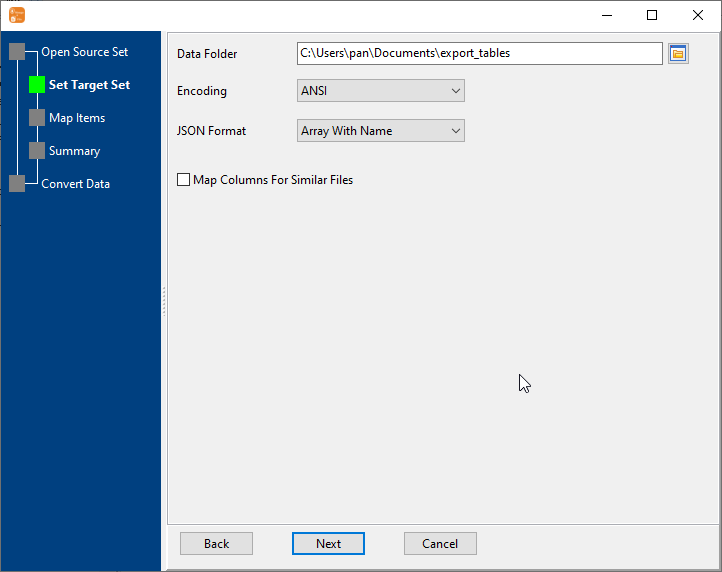
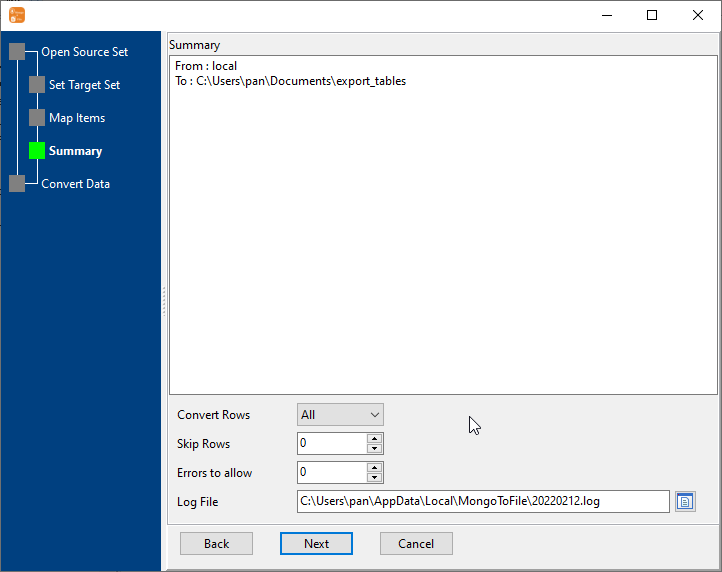
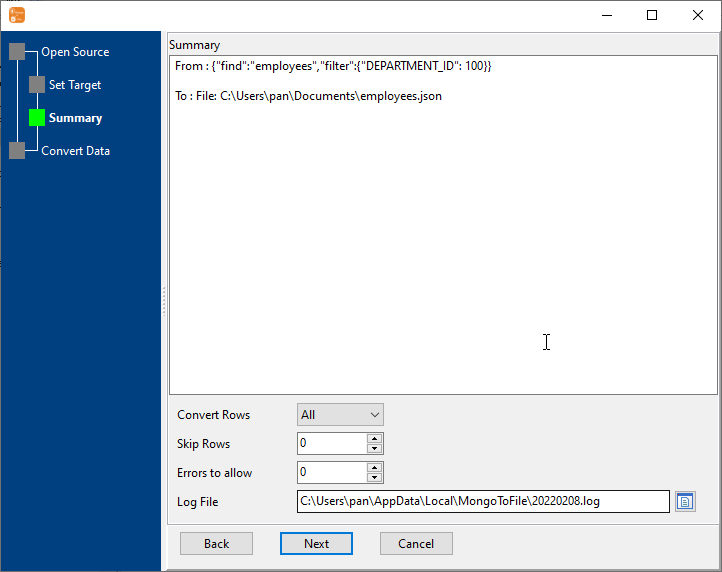
Configure JSON Export Settings
Set JSON formatting options (JSON Array/JSON Lines), encoding (UTF-8/GBK/Latin-1) for selective export.
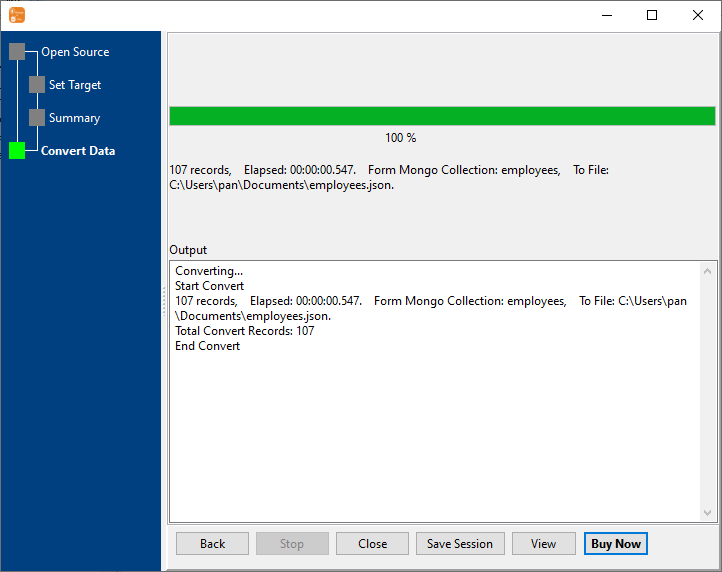
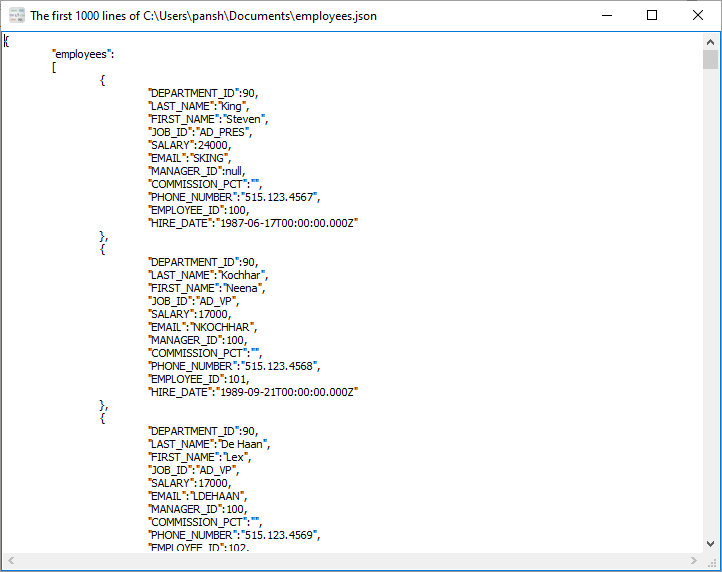
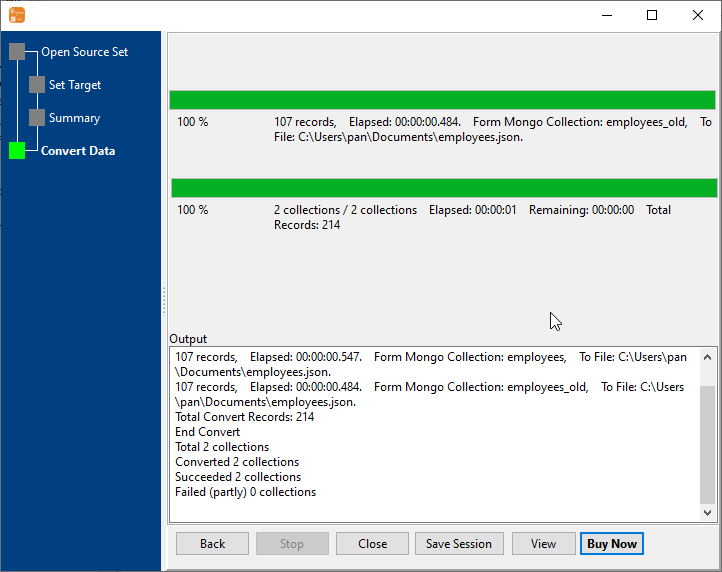
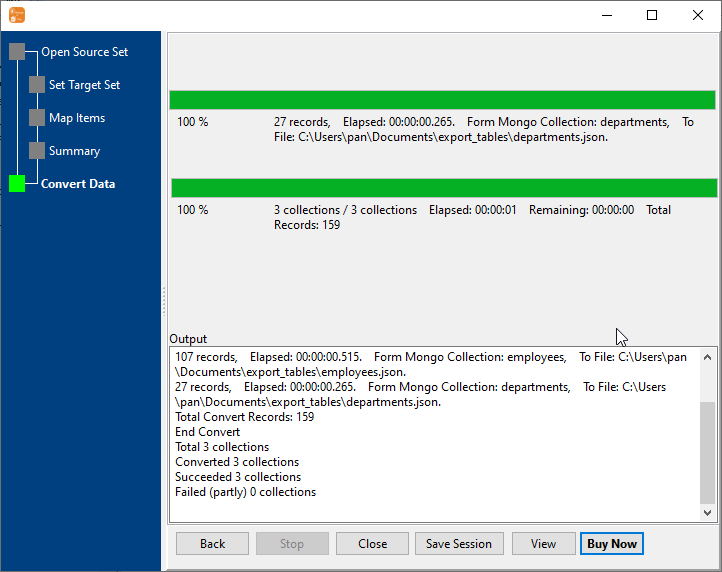
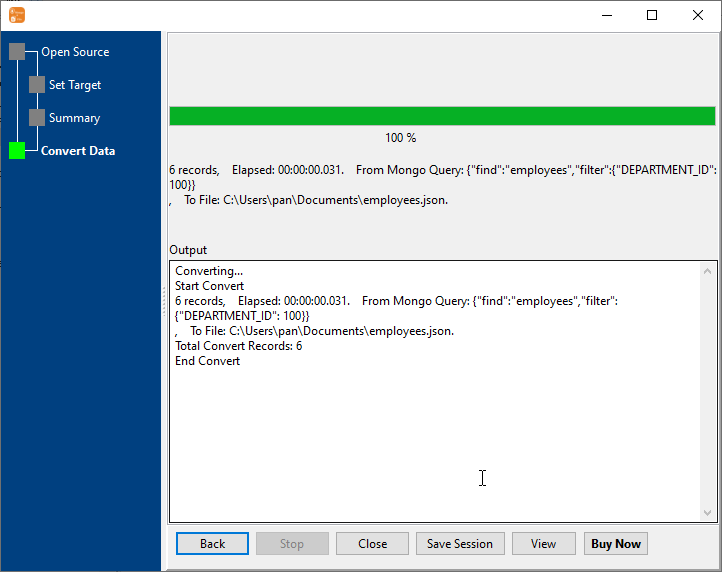
Start JSON Export & Monitor Progress
Real-time display of export speed, success/failure count, and remaining time.
4 Flexible MongoDB to JSON Export Types
Choose the perfect export method for your needs — from single query results to batch exports of multiple collections.
1 to 1
Export MongoDB collection to JSON file
Export one MongoDB collection to one JSON file — the most common export type for complete collection backup or data migration. Preserves all fields and documents in the collection.
Example:
Collection: products → JSON File: products.json
n to 1
Export multiple MongoDB collections to a single JSON file
Combine data from multiple MongoDB collections into one JSON file — perfect for consolidated reporting or when you need to analyze related data from different collections together.
Example:
Collections: orders_2023, orders_2024, orders_2025 → JSON File: orders.json
n to n
Batch export MongoDB collections to JSON files
Export multiple MongoDB collections to their own individual JSON files in one batch operation — saves time when you need to export many collections at once for backup or migration.
Example:
customers → customers.json
products → products.json
orders → orders.json
Find Result to File
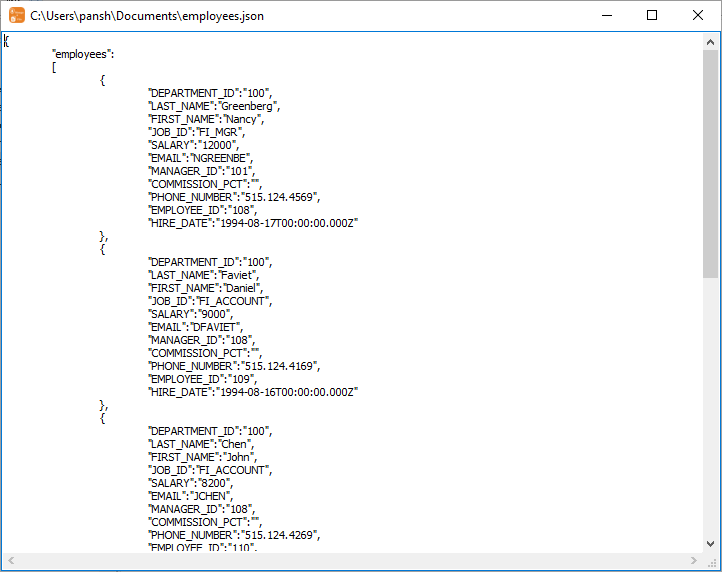
Export MongoDB query to JSON file
Execute a custom MongoDB find query and export only the matching documents to a single JSON file. Ideal for ad-hoc data extraction, reporting, or selective data export based on specific conditions.
Key Features of MongoDB to JSON Exporter
Flexible JSON Formatting
Support multiple JSON output formats including JSON Array, JSON Lines, and more.
10GB+ Dataset Support
Stream processing technology avoids memory overflow — export massive MongoDB collections to JSON without performance issues, limited only by your disk space.
MongoDB Query Filtering
Use MongoDB query syntax to export selective data — filter by fields, date ranges, or custom conditions to export only the data you need to JSON files.
MongoDB Compatibility
Works with MongoDB 3.x/4.x/5.x/6.x, MongoDB Atlas, and Azure Cosmos DB (MongoDB API) — both cloud and self-hosted deployments.
Scheduled Export
Set daily/weekly/monthly scheduled exports for automated JSON generation — support all 4 export types for complete automation on Windows, macOS, and Linux.
Cross-Platform Support
Consistent experience across Windows (10/11/Server), macOS (10.15+), and Linux (Debian/Ubuntu/Fedora/RHEL/openSUSE).
Common Use Cases for MongoDB to JSON Export
Data Backup & Archiving
Export MongoDB collections to JSON files for secure backup and long-term archiving — support scheduled automated backups and batch export of multiple collections.
Data Analytics & Reporting
Export MongoDB data to JSON format for integration with analytics tools (Tableau, Power BI, Excel) — customize JSON structure for seamless data analysis and reporting.
Data Migration & Integration
Migrate MongoDB data to other systems by exporting to JSON — compatible with JSON-based APIs, NoSQL databases, and ETL pipelines for seamless data integration.
Development & Testing
Export production MongoDB data to JSON for development and testing environments — filter sensitive data and customize JSON output for realistic test datasets.
Frequently Asked Questions About MongoDB to JSON Export
Q: Can I apply filters to export only specific MongoDB documents to JSON?
A: Yes! You can use full MongoDB query syntax to filter documents before export — support for field selection, date ranges, comparison operators, and custom conditions to export only the data you need.
Q: Can I export data from MongoDB Atlas (cloud) to JSON?
A: Absolutely! As long as your MongoDB Atlas cluster is accessible (whitelist your IP address in Atlas), you can export collections directly to JSON. All data processing happens locally on your machine — no data is uploaded to third-party servers.
Q: What's the maximum MongoDB dataset size supported for export?
A: There's no strict limit. The tool uses stream processing to read MongoDB data without loading the entire dataset into memory, so it can handle collections larger than 10GB. The only limitations are your local disk space for storing the JSON output files.
Q: Does it handle different character encodings for JSON output?
A: Yes! The tool supports UTF-8, GBK, GB2312, Latin-1, and other common encodings for JSON output files. This ensures proper character display when exporting MongoDB data with non-English content to JSON.
Q: Can I schedule automatic MongoDB to JSON exports?
A: Yes! The built-in task scheduler allows you to set up daily, weekly, or monthly scheduled exports. This works on all supported operating systems (Windows, macOS, Linux) and supports batch export of multiple MongoDB collections.
Ready to Export MongoDB to JSON Effortlessly?
Download the free 30-day trial — no credit card required, full features available. Works seamlessly on Windows, macOS, and Linux (Debian, Ubuntu, Fedora, RHEL, openSUSE).
Download MongoDB to JSON Exporter Buy MongoToFile - Starting at $75