Core XML to SQL Server Features
One-click GUI & CLI Support
Step-by-step wizard for beginners, command line for devs/automation
Flexible Import Modes
Single XML → SQL Server table, multiple XML → single/multiple SQL Server tables
Bulk XML Import
Import hundreds of XML files to SQL Server tables in one go
Update & Upsert SQL Server Data
Update existing rows or upsert (insert + update) from XML
Large File Support
Handle XML files >4GB with ease
Automation & Scheduling
Save sessions, create scripts, schedule recurring import tasks
100% Local Processing
No cloud uploads, your data stays private and secure
Cross-Platform
Native support for Windows, Linux, macOS
How to Import XML to SQL Server – 4 Simple Steps (GUI)
No coding required – follow our guided wizard to import XML to SQL Server in clicks:
Step 1: Connect to SQL Server & Select XML File
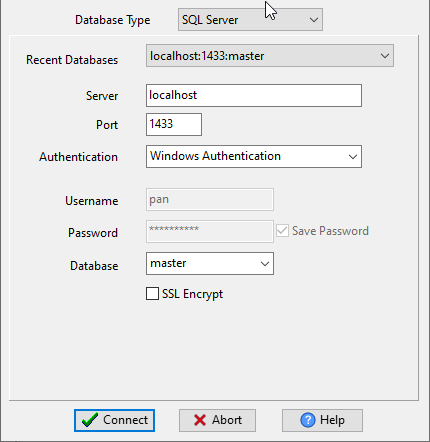
- Launch FileToDB, select SQL Server as the database type
- Enter your SQL Server server, port, username, password, and target database (support Windows/SQL Server authentication), then click Connect 📷
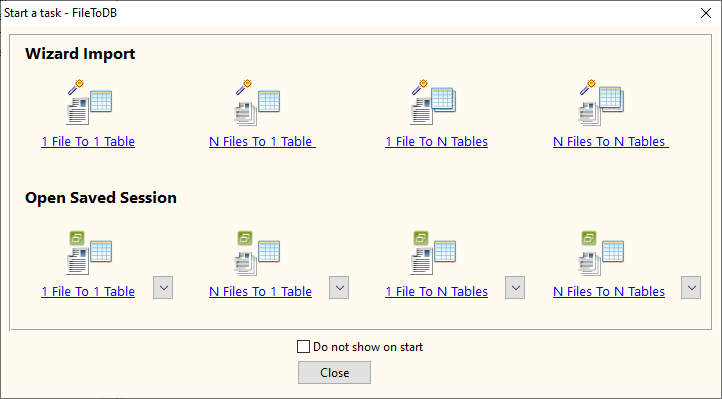
- Click Wizard → 1 File To 1 Table and select XML as the source format
- Upload your XML file (supports >4GB files) – auto-detects XML structure 📷
Step 2: Configure Table & Field Mapping
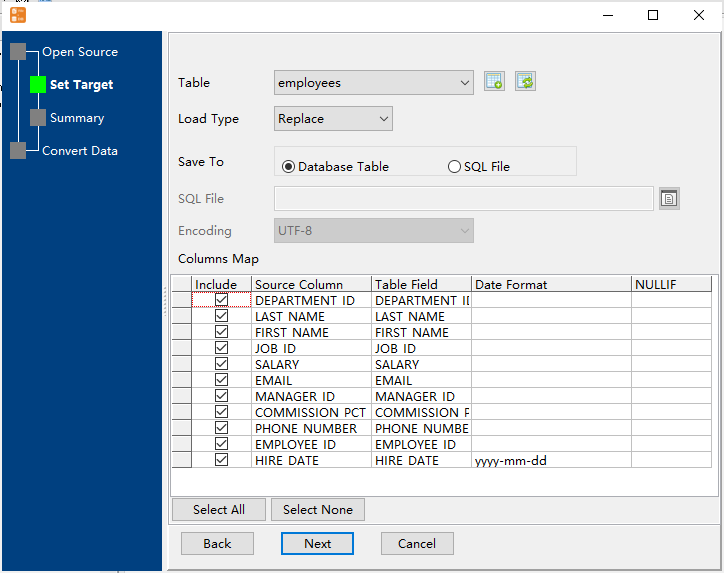
- Select target SQL Server table (create new or use existing)
- Map XML columns to SQL Server fields (auto-mapping available)
- Set custom options: date format, NULLIF rules, load type (Replace/Append/Update/Upsert) 📷
- For Update/Upsert: Select key column (e.g., EMPLOYEE_ID) to match rows 📷
Step 3: Preview Data Before Import
- Preview first 10+ XML records to verify accuracy
- Adjust settings: skip rows, set error tolerance, configure log file path 📷
- Verify field mapping – avoid bad imports!
Step 4: Import XML to SQL Server
- Click Start Convert – import in real-time
- View progress: total records, elapsed time, success/failure status 📷
- After import, directly view data in SQL Server table within the tool
Typical Speed: 107 XML records imported in 0.031 seconds | Millions of rows in minutes.
Batch Import XML to SQL Server – 2 Common Use Cases
Handle bulk XML imports with our specialized wizards – same simple process for all bulk operations:
Use Case 1: Multiple XML Files → Multiple SQL Server Tables (N Files → N Tables)
Ideal for organizing related XML files into their own tables (e.g., countries.xml → countries table):
- Connect to SQL Server, click Wizard → N Files To N Tables
- Select folder with XML files (filter *.xml, recursive folders supported)
- Auto-configure first XML file's structure (applies to all files)
- Map each XML file to corresponding SQL Server table (auto-mapping for matching names) 📷
- Preview settings and select load type (Replace/Append)
- Bulk import – all files to their tables in one go 📷
Use Case 2: Multiple XML Files → Single SQL Server Table (N Files → 1 Table)
Perfect for combining identical XML datasets into one table (e.g., 1.xml, 2.xml → employees table):
- Connect to SQL Server, click Wizard → N Files To 1 Table
- Select folder with XML files (supports >4GB, recursive folders)
- Configure first XML file's structure (auto-applies to all)
- Select single target SQL Server table and map fields (auto-mapping)
- Preview combined data and adjust settings
- Bulk import – merge all XML data into one table 📷
Update & Upsert SQL Server Data from XML
Sync XML data with SQL Server – no manual SQL queries required:
Update SQL Server from XML
Overwrite existing SQL Server rows with fresh XML data (match by unique key):
- Follow 1 File → 1 Table wizard (or bulk wizard)
- In Load Type, select Update and choose key column 📷
- Map XML fields to SQL Server table fields
- Preview updated data and click convert
Upsert XML to SQL Server (Insert + Update)
Insert new rows, update existing rows (match by key) – the ultimate sync mode:
- Follow standard import wizard
- In Load Type, select Upsert and choose unique key column 📷
- Map fields and preview data
- Click convert – auto-handles inserts and updates in one step
Automate & Schedule XML to SQL Server Imports
Turn repetitive import tasks into automated, scheduled jobs (Windows/Linux/macOS):
Step 1: Save Your Import Session
- Complete XML to SQL Server import/upsert/update in GUI
- Click Save Session to store all settings (paths, mapping, load type)
Step 2: Generate a Script for CLI
- Export saved session to .bat (Windows) or .sh (Linux/macOS) script 📷
- Run script via command line – no GUI required
Step 3: Schedule Recurring Tasks
- Windows: Use Task Scheduler to run .bat file (daily/hourly/weekly)
- Linux/macOS: Use Crontab to schedule .sh file
Why automate? Eliminate manual work, ensure real-time sync, run imports in background.
Why Choose Withdata FileToDB for XML to SQL Server?
- Blazing Fast Performance – Import millions of XML rows to SQL Server in minutes, handle >4GB files
- 100% Local & Private – No cloud uploads, your data stays secure on your machine
- Cross-Platform – Native support for Windows, Linux, macOS
- Flexible & Scalable – Supports all workflows: single/bulk import, update, upsert, CLI, automation
- Real-Time Progress & Logs – Track import status and troubleshoot with detailed logs
- No Technical Skills Required – Guided GUI for beginners, CLI for developers
FAQ: XML to SQL Server with FileToDB
How long does it take to import XML to SQL Server?
100+ records in milliseconds, millions of rows in under a minute – faster than manual parsing/SQL.
Is it safe to import XML to SQL Server with FileToDB?
100% safe – all processing is local, no data leaves your machine, no cloud uploads.
What SQL Server versions does FileToDB support?
FileToDB support SQL Server 2000, 2005, 2008, 2008 R2, 2014, 2016, 2017, 2019, 2022, 2025.
Can I import XML to SQL Server on Linux/macOS?
Yes! Native versions for Windows, Linux, macOS – no compatibility issues.
Can I run XML to SQL Server imports via command line?
Absolutely – save GUI session, export to .bat/.sh script, run via CLI for automation.
Does FileToDB support large XML files (>4GB)?
Yes – handle large XML files with ease, no size limits.
Can I map custom XML columns to SQL Server table fields?
Yes – manual mapping, date format settings, NULLIF rules for full control.
Get Started with XML to SQL Server Today
Easy, fast, secure XML to SQL Server import – no hidden fees
Download FileToDB Now
Works great in 2026 and beyond – regular updates for SQL Server/XML support