Want to import data from each table in a SQL file to a separate Oracle table?
Try Withdata FileToDB, a SQL to Oracle converter, Import each table data in a SQL file to a separate Oracle table, Easy and Fast.
- Can run in GUI mode, Step by Step, just a few mouse clicks.
- Can run in Command line, for Scheduled Tasks and Streams.
- Import SQL to Oracle locally and privately, avoid uploading SQL file(s) to online services.
- Support Windows, Linux, and macOS.

Import data from each table in a SQL file to a separate Oracle table
Select tables in SQL file -> Set Oracle tables -> Import SQL data to Oracle
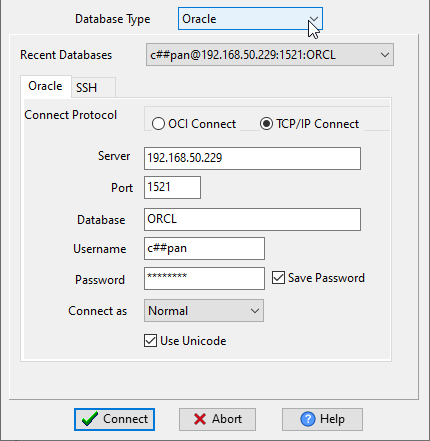
Choose Oracle and logon.
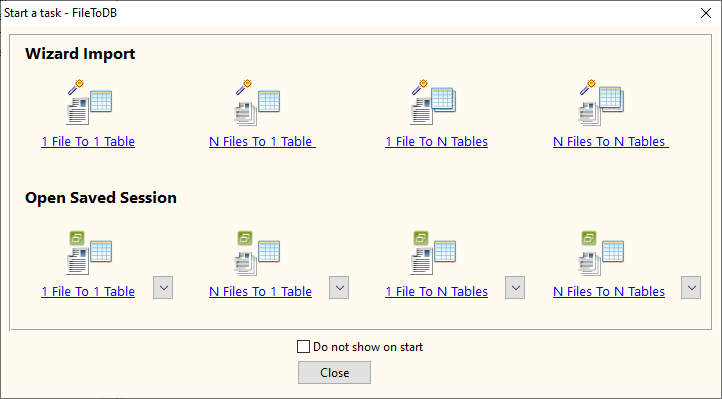
Click “Wizard – 1 File To N Tables” at task dialog.
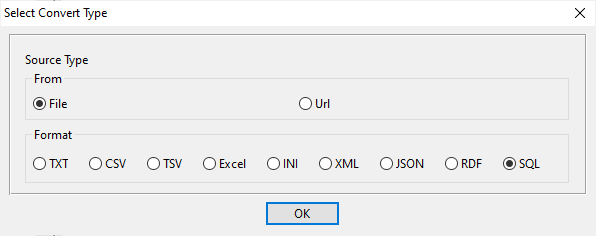
Select the “SQL” file type.
then show the wizard.
1. Open a SQL file, select tables.

2. Show existing Oracle tables, choose “Import Type”.
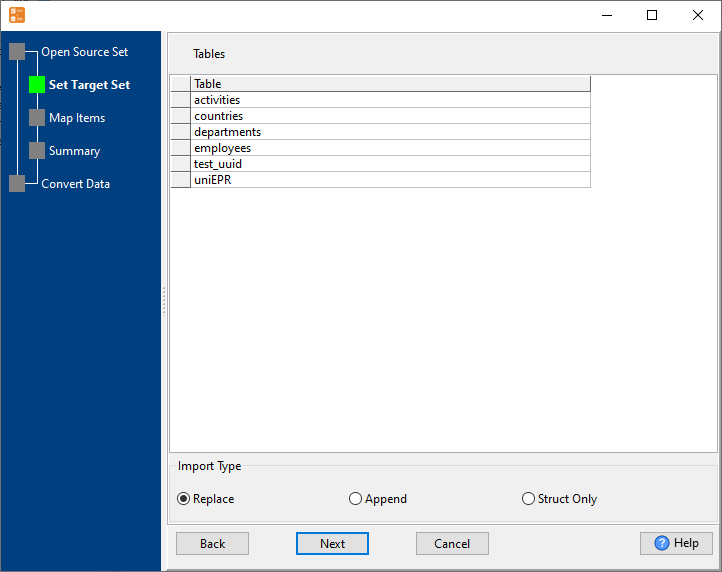
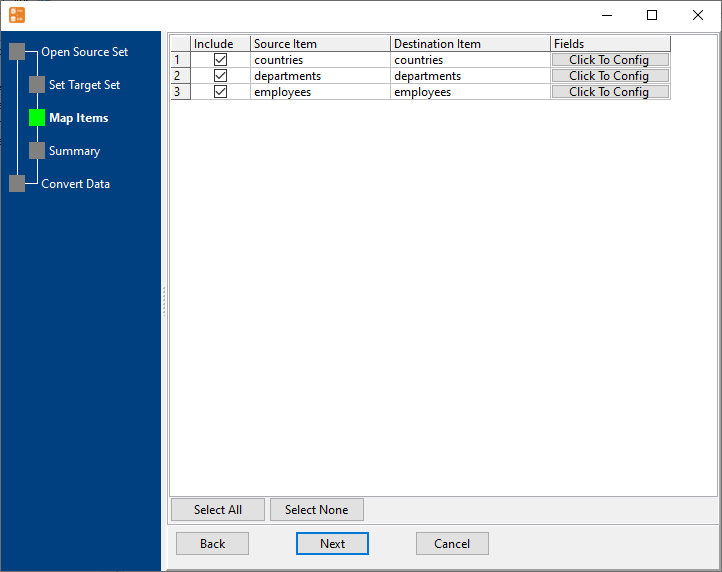
3. Set Oracle tables.
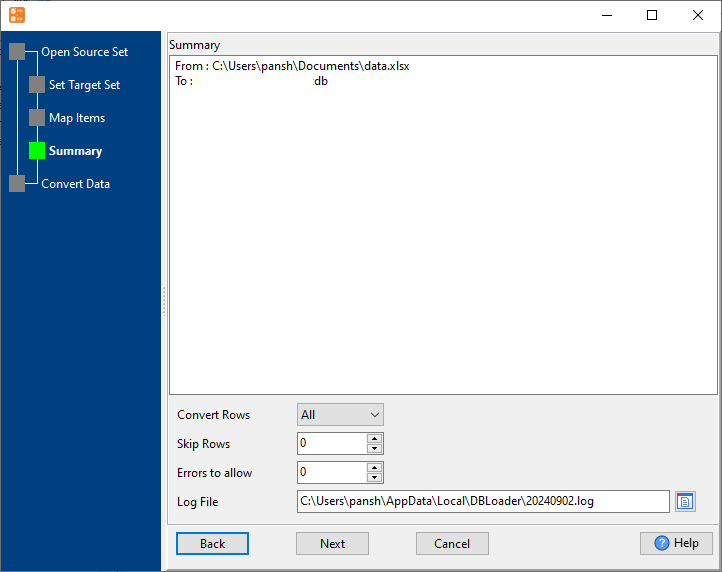
4. Show summary, set “Convert Rows”.
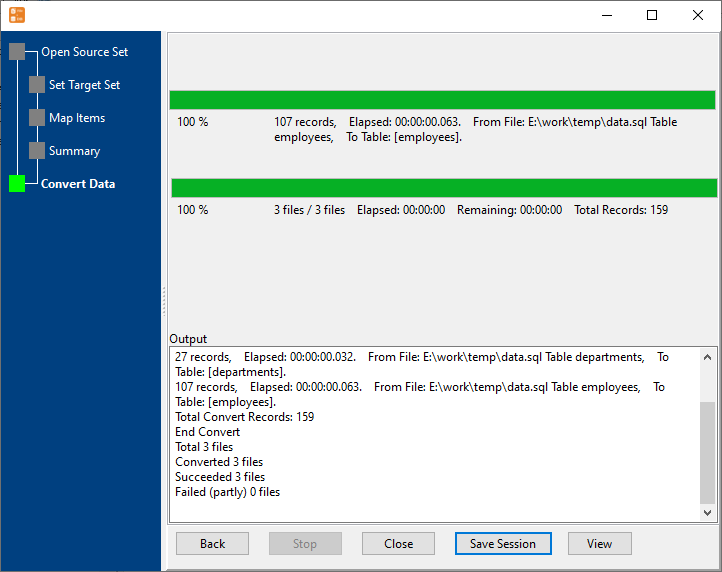
5. Import data from each table in a SQL file to a separate Oracle table.
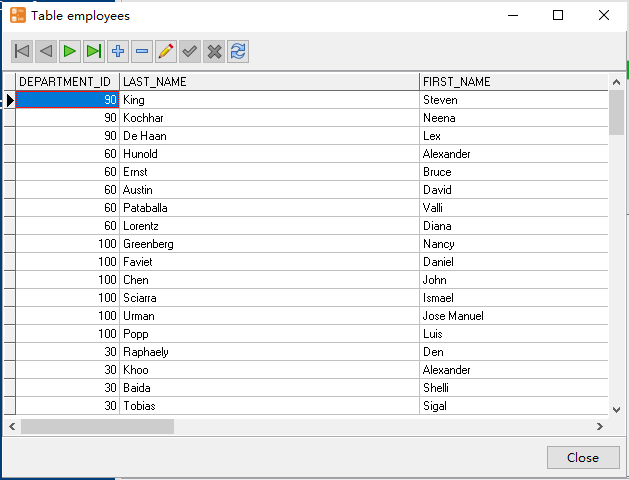
View imported data in Oracle table
More about SQL file to Oracle converter
Download Withdata FileToDB
See Video: Import each table data in a SQL file to a separate Oracle table at one time
SQL → Oracle reference
Type mapping
| Value kind | in SQL | in Oracle |
|---|---|---|
| Int | INT | NUMBER(10) |
| Bigint | BIGINT | NUMBER(19) |
| Decimal | DECIMAL(p,s) | NUMBER(p,s) |
| Float | DOUBLE PRECISION | BINARY_DOUBLE |
| Text | VARCHAR(n) | VARCHAR2(n) |
| Long text | TEXT / CLOB | CLOB |
| Binary | BLOB / BYTEA | BLOB |
| Boolean | BOOLEAN / SMALLINT | NUMBER(1) |
| JSON | JSON / TEXT | CLOB |
Dialect differences
SQL is a file format and Oracle is a database server, so the target has to be told the types the file never carried - the rows below are where the two sides diverge.
| Property | in SQL | in Oracle |
|---|---|---|
| port | — | 1521 |
| identifiers | Two competing conventions: single-quoted literals and diale... | "double quotes" |
| row limit | — | FETCH FIRST n ROWS ONLY |
| dates | Depends on the dialect: DATE literals, TO_DATE(), or plain ... | DATE, TIMESTAMP |
| long text | — | CLOB, NCLOB |
| binary | Dialect-specific: X-quoted literal, 0x hex, or decode() | BLOB, BFILE |
| separator | Statement terminators (;) | — |
| encoding | No declaration | — |
| typing | Types belong to the target database, and they differ betwee... | — |
| shape | Statements; a dump usually means CREATE TABLE plus INSERT rows | Tables of rows and columns |
| ceiling | No formal limit, but a single INSERT statement has to fit i... | — |
Command line
| Side | Command |
|---|---|
| Oracle | exp / expdp |
| Oracle (load) | sqlldr (SQL*Loader) |
Convert your data online, free
Free in-browser converters for CSV, Excel, JSON, XML and SQL: Withdata Online Data Conversion. Large files, batch conversion or scheduling? See the offline desktop apps, or browse all data conversion tools.